Not everyone has the luxury of large, open-plan spaces. But in over eight years of designing interiors across Lucknow and Uttar Pradesh, I've learned that a room's perceived size has far more to do with design choices than square footage. The following ten techniques are the ones I return to most consistently — each capable of transforming even the most compact room into a space that feels generous, light, and alive.
1. Use Mirrors Strategically — Not Just Decoratively
A mirror doesn't just reflect light — it doubles the perceived depth of a room. Place a full-height mirror on one wall of a narrow corridor, and the space immediately appears twice as wide. In a small bedroom, a wardrobe with mirrored sliding doors performs the same function while also being practical.
The key is placement: position mirrors opposite windows to capture and amplify natural light, or on the wall that faces the most visually interesting part of the room. Avoid placing mirrors where they reflect another mirror — this creates an infinity effect that feels more disorienting than expansive.
2. Choose a Light, Cohesive Colour Palette
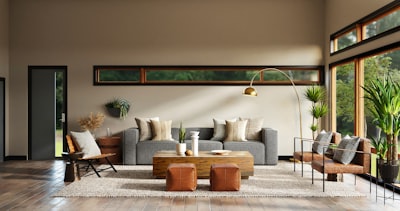
Colour is one of the most powerful tools in the space illusion toolkit. Light colours — warm whites, soft creams, pale greys, muted sage — reflect light and visually push walls outward. Darker colours absorb light and make walls feel closer.
Equally important is cohesion. When walls, ceiling, trim, and major furniture pieces share a similar tonal family, the eye travels uninterrupted across the space. This continuity creates a sense of expansiveness that contrasting colours break up and diminish.
"The most spacious rooms aren't always the largest — they're the ones where colour and light work in harmony to dissolve the boundaries."
3. Take Curtains to the Ceiling
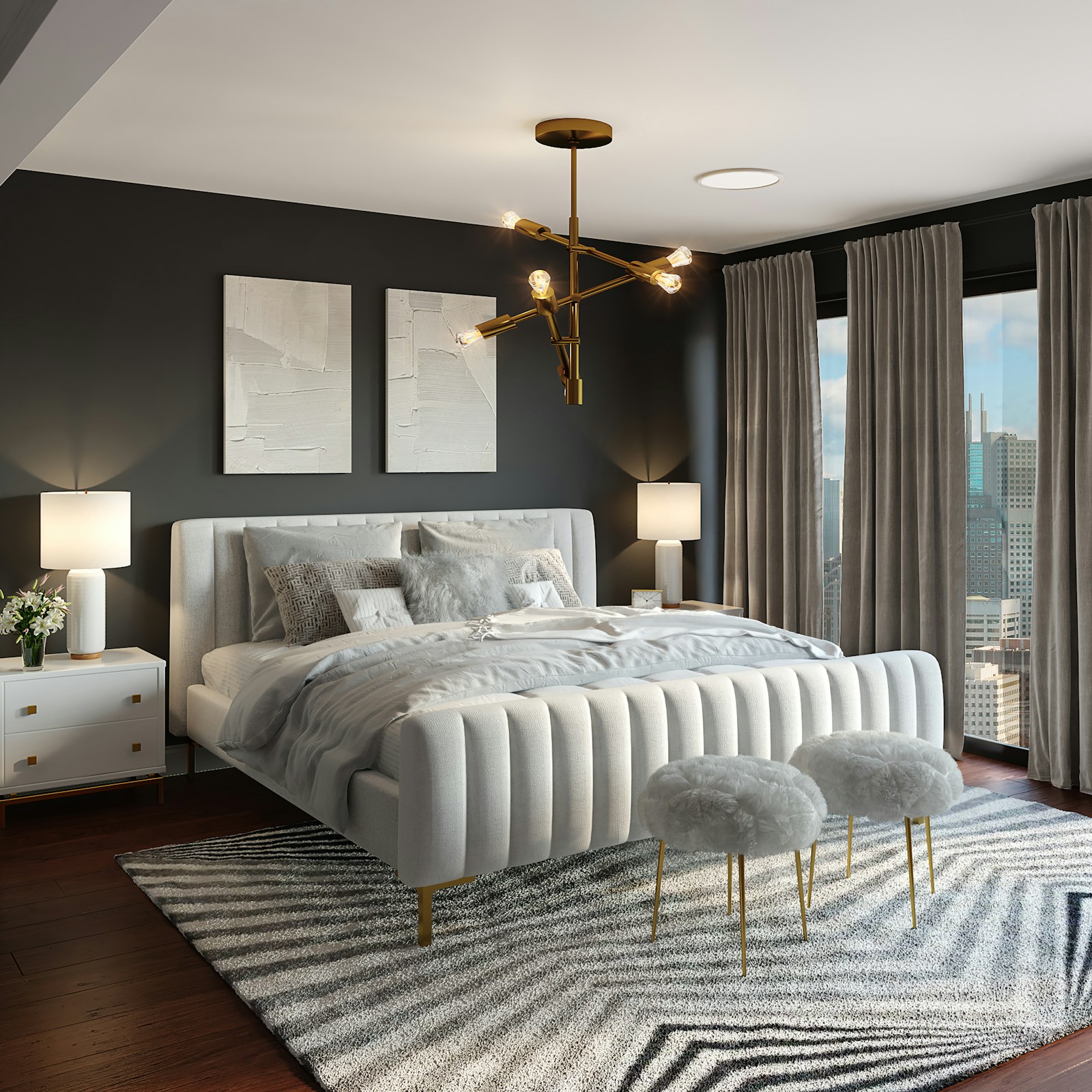
This is perhaps the single most transformative trick in a designer's repertoire, and it costs almost nothing extra. Hanging curtains as close to the ceiling as possible — rather than just above the window frame — creates the illusion of dramatically taller ceilings and larger windows.
Choose curtains in a light, semi-sheer fabric that allows natural light to filter through. Floor-to-ceiling drapes that pool slightly on the floor add an additional layer of height and luxury.
4. Use Multi-Functional Furniture
In compact spaces, every piece of furniture must justify its footprint by serving more than one purpose. A storage ottoman replaces both a coffee table and a storage unit. A sofa bed eliminates the need for a separate guest room. A dining table that folds against the wall creates an instant work-from-home station.
At Era21, we regularly design custom built-in furniture for smaller apartments — a bed with deep storage drawers underneath, a window seat with hidden storage inside, a dining bench that doubles as a shoe cabinet. These bespoke solutions use every cubic centimetre intelligently.
5. Embrace Vertical Space
Most people decorate horizontally — furniture arranged across the floor plane, artwork hung at eye level. The most effective way to make a small room feel larger is to draw the eye upward. Tall bookshelves that reach the ceiling, vertical stripes on an accent wall, floor-to-ceiling drapes, and artwork hung higher than conventional wisdom suggests — all of these redirect visual attention upward, making the ceiling feel higher than it is.
6. Eliminate Visual Clutter Ruthlessly
Clutter is the enemy of spaciousness. Every unnecessary object on a surface fragments the visual field and makes a space feel crowded and anxious. This doesn't mean adopting a sterile minimalism — it means being intentional about what you display.
The rule I apply in my own practice: if an object doesn't give you genuine pleasure every time you look at it, store it away. What remains should be curated and displayed with generous breathing space around it. Three carefully chosen objects on a shelf feel considered and elegant; fifteen objects on the same shelf feel chaotic regardless of their individual quality.
7. Let Natural Light Flow Freely
Natural light is the most powerful space-expanding element of all — and it costs nothing. Keep window sills clear of obstruction, choose window treatments that can be drawn completely clear of the glass, and consider whether internal walls could be replaced with glass partitions to borrow light from adjacent spaces.
In Lucknow's climate, where intense summer sunlight can be unwelcome, use sheer curtains or frosted glass that diffuse light without blocking it. Diffused light is gentler, more flattering, and still creates the sense of openness that direct light provides.
8. Match Flooring Across Rooms
Using different flooring materials in every room — wood in the living room, tiles in the dining room, carpet in the bedroom — visually fragments the home into separate, smaller-feeling zones. Using a consistent flooring material throughout creates a seamless flow that makes the entire home feel like one generous, unified space.
If using different materials is unavoidable, at least maintain a consistent colour temperature — warm-toned wood with warm-toned tiles, for example — to preserve visual continuity.
9. Use Scale Thoughtfully
Counter-intuitively, small rooms sometimes benefit from one or two large-scale furniture pieces rather than many small ones. A single large sofa creates a clear focal point and leaves floor space open around it; several small chairs and tables of varying sizes create visual confusion and make the room feel busier than it is.
Similarly, a single large piece of artwork on a wall makes a more powerful statement and feels more spacious than a gallery wall of many small frames. Scale and confidence go hand in hand in interior design.
10. Layer Your Lighting
A single overhead light source creates harsh shadows and makes rooms feel flat and smaller. Layered lighting — combining ambient ceiling fixtures, task lamps, wall sconces, and floor lamps — creates depth and dimension that single-source lighting cannot.
In the evening, when natural light is gone, a well-layered lighting scheme creates multiple "pools" of light at different heights. This vertical variation mimics the complexity of daylight and makes the room feel dramatically larger and more alive than a uniform overhead wash.
The Transformative Power of Design
Space is a perception, not a measurement. I've walked into 200 sq ft studio apartments that felt genuinely generous and calming, and I've stood in 600 sq ft living rooms that felt claustrophobic and chaotic. The difference was always design — the intentional application of light, colour, proportion, and material to create the experience the space deserves.
If you're working with a challenging space and aren't sure where to begin, our team at Era21 Designs offers free consultations. We'll assess your specific situation and recommend the most effective interventions — whether that's a simple styling refresh or a full redesign.
Transform Your Space Today
Every space has potential. Let us show you what yours can become.
Book Free Consultation